
Second Spring
“In nature, nothing is created and nothing is lost, everything is transformed.”- José Saramago
Reaching 32, I’ve been naive enough or shielded enough, or some mix of the two, that adulthood has only just made itself known. I’m starting to see time through the lens of depth, and mortality as a random certainty. My memories and experiences serve as a pool of somewhat reliable data points to guide my supposed free will as best I can. For some reason, now at 32, I feel I have banked a sufficient amount of data to try a different approach and go back to the drawing board with an uncertain confidence.
What’s become undeniable with age is how time is uneven; some years fly by, others drag, but always, somehow, it moves faster than before. And looking back on this forever-moving time, it’s clear that there is only one finality and infinite beginnings. Recognising this gives us the ability to comfortably adapt and move along, embracing any potential.
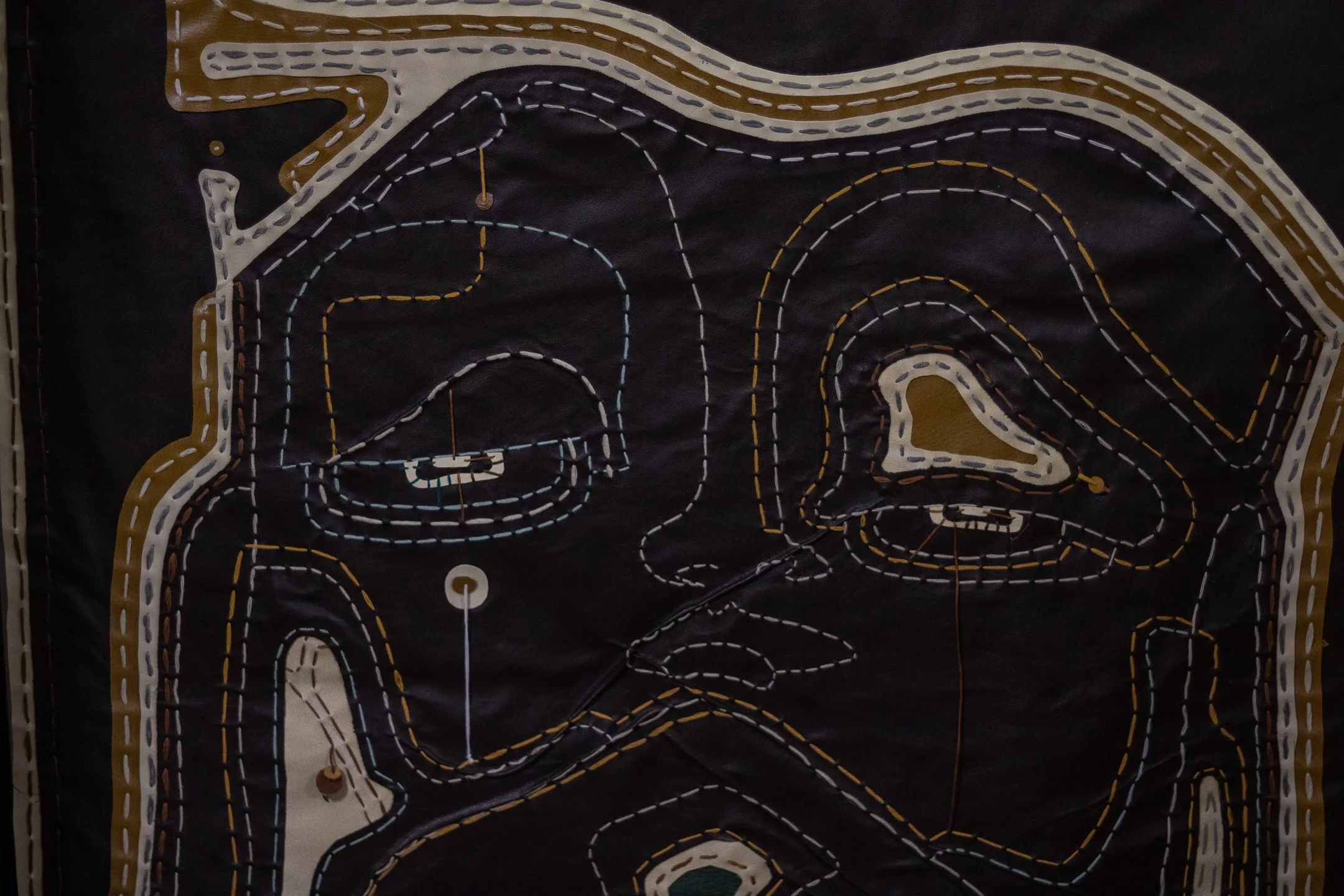
Elfreda Dali’s approach to materials feels like a physical version of the shift I’m trying to make internally. What excites me about Elfreda’s perspective is her sense of renewal. She uses irregular leftover leather offcuts to give voice to new narratives and a more intimate vehicle to share her story, using her hands to mould her own definitions of purpose and acceptance. She layers the leather delicately to tell the stories from those before and around her, building upon marks and distress from the materials’ previous use. Scraps that had been stored in the dark, long after their intended purpose, become the seeds of a new story.
That these materials were once overlooked or left out of a previous intention doesn’t affect Elfreda’s tactile relationship with each piece. Named after different months, the works reflect those cyclical shifts and tones between seasons, which offer us the comfort of familiarity and the hope of something different. She combines acrylic, leather, and leftover materials so seamlessly, as if guided by the muscle memory of many generations past. Perhaps that’s what makes them so familiar, the sense that their second life carries the rhythm of all the others that came before.
When seen together, Second Spring feels in conversation between materials, time and beginnings. There’s a sense of rhythm between them, a repetition that isn’t predictable but comforting, like looking through months of your own life and noticing what’s changed and what’s stayed the same.
My approach at 32 is to try a different metric. I am learning to listen to what my body recognises before my mind catches up. Although it may feel new to me, the data being used to trigger my instinct had a life long before my consciousness.
There is a kind of freedom in accepting that we spend our lives reinterpreting what already exists. Each attempt is honest in its own way. Renewal is not about starting over, but about letting something continue in a new form.
Elfreda’s works in Second Spring hold this truth quietly. In the materials she reuses, in the patience of her process, and in the way each piece carries traces of what came before. A reminder that every continuation is its own beginning.
Words by Lauren Demir